


In this article
Anxious and on edge. All day long.
No panic attack. No clear trigger. Nothing specific you're afraid of.
You wake up, and before your feet even touch the floor, it's already there. That heavy feeling that something bad is about to happen.
That's what it can feel like when your nervous system is stuck in fight or flight.
TJ, who went through our program, described it perfectly in a meeting we had last week:
"I'm not afraid to go outside, I'm not afraid to do anything. But I'm afraid all day long."
Some of us call it the 24/7 club.
And if you're in it, you might feel like you don't fit anywhere. Most of what you read about anxiety is about panicking on a plane or being afraid of the grocery store. So you think: "That's not me. I'm not afraid of anything specific. So what's wrong with me?"
Nothing is wrong with you. Your mind isn't broken, and there's nothing wrong with your body either.
And 24/7 anxiety is something you can recover from, just like panic attacks, intrusive thoughts or any other form of anxiety.
In this post I want to explain what's actually going on, why your nervous system won't switch off, and how it finds its way back.
And even if you don't have anxiety 24/7, it's still an interesting read cause I'll tell you more about regulating your nervous system.
So let's dive in.
What Being Stuck in Fight or Flight Feels Like
For me, it started with panic attacks. A lot of them.
But over time, it turned into something more constant. A simmer of anxiety that was just always there.
I was on edge all day. I felt nauseous so often that I really believed I could throw up at any given moment. And I could snap into anger or fear over the smallest things.
I even thought I was becoming a more negative person as I got older. Which I hated, because I used to be so optimistic and happy.
Maybe you recognize some of this:
- You feel tense and on edge, all day long
- A sense of dread or impending doom, without knowing why
- You wake up and it's already there
- You can't sit still, or you feel exhausted and wired at the same time
- Less joy, more negative or strange thoughts
- A body full of strange symptoms that come and go
Or, as someone put it on a call with our team: "My nervous system is just stuck in 'on' mode."
It can feel like 20 different problems. So you go looking for 20 different solutions.
But it's really just one: a sensitized and dysregulated nervous system. Not broken, not damaged. Just trained, through repetition, to react a lot more than it needs to.
A nervous system that believes you are in constant danger - and it has taken a proactive approach to keeping you safe.
Why Your Nervous System Won't Switch Off
Your nervous system is built to switch between two modes. Fight or Flight when there's danger, and Rest and Digest when the danger is gone.
And it's really good at it. It can go from 0 to 100 in seconds, and back down again within minutes.
So why doesn't it switch back?
Because your nervous system learns from what you do, not from what you tell yourself.
When anxiety shows up, we do what feels most natural in a moment of danger. We fight it. We check if it's still there. We analyze it, google it, try to fix it, and wait for it to finally leave.
Maybe you, unknowingly, do this a 100 times a day!
And your nervous system is keeping tabs on all of that. Because if you weren't in danger, why would you be fighting all day long?
So it does the smart thing, and keeps you in survival mode. Just in case.
In last week's post I explained how a single wave of panic always passes, because adrenaline burns off quickly.
But when you're fighting and checking all day, your body keeps releasing stress hormones like cortisol, which is much slower to come down. So the background level never really gets the chance to drop.
That's the 24/7 feeling.
And the checking is the sneakiest part. "Is it still there? Is it getting better? Why is it still here?"
Every check tells your nervous system: this is important, keep watching.
I recorded a video about exactly this, and why all those symptoms are really one problem:
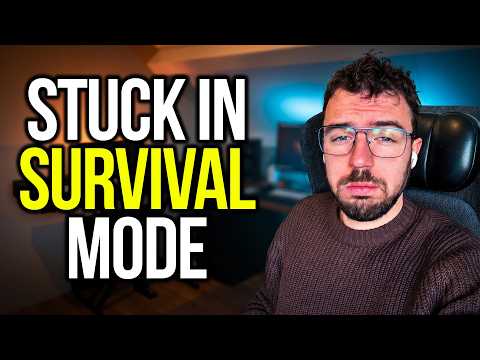
Why Trying to Regulate Your Nervous System Can Keep It Stuck
Once people learn it's a nervous system thing, the next question is usually: "OK, so how do I regulate my nervous system?"
And there's no shortage of answers out there. Breathing techniques, vagus nerve exercises, cold showers, grounding tricks.
TJ even started getting ads for special sound tones that were supposed to calm his nervous system.
His reaction: "It's not gonna help my nervous system, what are you talking about?"
And he's right.
When you use any of these to get rid of the anxiety, they become one more way of fighting it. And fighting it is exactly the signal that keeps your nervous system on high alert. (I wrote more about that in why breathing exercises can make your anxiety worse.)
It's also why "just relax" never works. Relaxing simply isn't on the priority list of a nervous system that believes you're in danger.
And something that might surprise you: a "normal" regulated nervous system still has anxious thoughts and strange sensations sometimes. Everyone's does.
The difference is that they don't overwhelm you anymore - and you know how to deal with that better so it doesn't become a problem.
So the goal isn't to make every sensation disappear. The goal is to stop needing it to disappear.
Paradoxically... that's when they do disappear.
Marvellous ol' system, innit?*
(*read in British accent)
Yes, 24/7 Anxiety Is Something You Can Overcome
Maybe you're thinking: "But my anxiety is different. I don't have panic attacks. I don't have a trigger I can face. So what am I supposed to work on?"
I hear this a lot. And I get why, because most advice is built for a clear fear. Afraid of driving? Practice driving.
Afraid of the grocery store? Go to the grocery store.
With 24/7 anxiety, there's no obvious thing to face.
Or, as TJ put it: "You gotta just kind of do it every day and live it every day."
And that's exactly it.
Because underneath, it's the same thing as every other form of anxiety: a nervous system that has become very sensitive to anxiety itself, because of repeated resistance.
Your specific triggers or symptoms don't change that.
So the way out is the same too.
And that's actually good news. If your own behavior is what keeps the alarm on, your behavior is also what allows it to switch off.
Your nervous system wants to regulate itself, and it's perfectly able to. There's nothing broken about it. It's just doing its job a little too well.
Survival mode is a state. It's not who you are. And states can change.
How to Get Out of Fight or Flight
So how do you stop giving your nervous system reasons to stay on high alert?
1. Understand what's happening
It starts with understanding what you're dealing with. Not a mystery illness, not 20 separate problems, but one: a dysregulated nervous system.
The more you understand that, the less power each new symptom has over you. (If you want to know how it got this way in the first place, read what causes anxiety.)
And do get yourself checked out by a doctor at least once. That way, you can stop wondering whether something else is going on, and start working on this one problem.
2. Stop behaving like there's danger
The checking, the body scanning, the googling, the analyzing, the trying to fix it. That's how your nervous system keeps getting the message that there's danger.
So every time you notice yourself doing it, drop it, and go back to whatever you were doing. (More on that in why checking keeps your anxiety going.)
That goes for your mornings too. When you wake up and it's already there, don't lie in bed scanning your body and wondering what today will bring.
Notice it, "There it is", and get up and go about your morning anyway. (I wrote all about that in why you wake up with anxiety every morning.)
3. Live your life with it, not around it
Don't wait until you feel better to do the things that matter to you. Go to work, see your friends, play with your kids, and let the anxiety come along.
Every time you do, you show your nervous system that this feeling isn't a threat that needs to run the show.
4. Respond every time, and give it time
With 24/7 anxiety, you might notice it every two minutes. That's fine. Then you respond every two minutes.
Remind yourself what it is, let it be there, and carry on.
At first, that might be a hundred times a day. Because your nervous system doesn't change from one big insight. It changes through repetition, through hundreds of moments where the anxiety showed up and you didn't add a second layer of fear on top of it.
This is why many people struggle with this response and end up needing the support and guidance from a Mentorship Program like Anxiety Wave. The job is pretty simple to understand, but really hard to implement CONSISTENTLY.
If you do though, your nervous system settles in its own time.
Your body wants to heal. Your job is simply to get out of its way.
You're Not Too Far Gone
Brandon, one of our graduates and now one of our mentors, had panic attacks for four and a half years. "Anxiety was just 24/7," he says.
"I was so convinced that I was broken and that nobody could help me and that somehow I was different."
He wasn't. And today he helps other people out of that exact same place.
Adam, a graduate and dad of three, described the road there really well:
"You're going to have good days, you're going to have really bad days. Over time, the baby steps turn into bigger steps and then pretty soon you're running."
So if you're part of the 24/7 club right now, remember this:
You're not different, and you're not too far gone. Your nervous system isn't broken. It's been doing its job a little too well.
Give it fewer reasons to keep you in survival mode, and it will find its way back.
You're not alone in this, and full recovery is possible.
Thank you for reading and good luck!
-Jort
P.S. If you'd like support with this, you can book a free discovery call with my team. Everything about the call is explained here.
This article is for education and is based on lived experience. It is not medical advice and does not replace a doctor or therapist. If you have new or changing symptoms, get them checked by a doctor. If you are in crisis, contact your local emergency number.