

In this article
If you're reading this, someone you love is struggling with anxiety or panic.
Maybe they sent you this post because they want you to understand what they're going through.
Or maybe you found it yourself, because you want to help and you just don't know how anymore.
Either way, thank you for being here.
I know how confusing and helpless it can feel to watch someone you love struggle with something you don't fully understand.
You want to help. You try everything. And somehow it never seems to make a real difference.
I know this from the other side too.
I dealt with severe anxiety and panic attacks for over six years, and I got really good at hiding it.
My fiancée at the time often didn't even know what was happening. I'd feel the tight chest, the dizziness, the nausea and the urge to run... and I would just power through without saying a word.
I didn't want to burden her. I didn't want to be seen as weak.
But it was still really hard on her. At times she felt hopeless and stuck, because my panic was shrinking her life too.
So if you've been wondering how to support a partner with anxiety, this post is for you.
I'll explain what's actually going on inside the person you love, which kind of help accidentally makes it worse, and how you can be a powerful part of their recovery.
If you'd rather watch than read, I recorded a video especially for partners and loved ones:

What's Actually Happening Inside the Person You Love
Let's start with this: anxiety is real. It's not "just in their head", it's not made up and it's not weakness.
But it's also not dangerous.
Everyone has a built-in alarm system called the stress response. It's there to keep us safe, and in real danger it works beautifully.
A car swerves towards you, and in a split second your heart races, your muscles tense and you're ready to run.
With anxiety, that same alarm goes off when there's no real danger at all.
It can be set off by a thought, a sensation in the body, a place or even a memory. And the body reacts as if it's under attack.
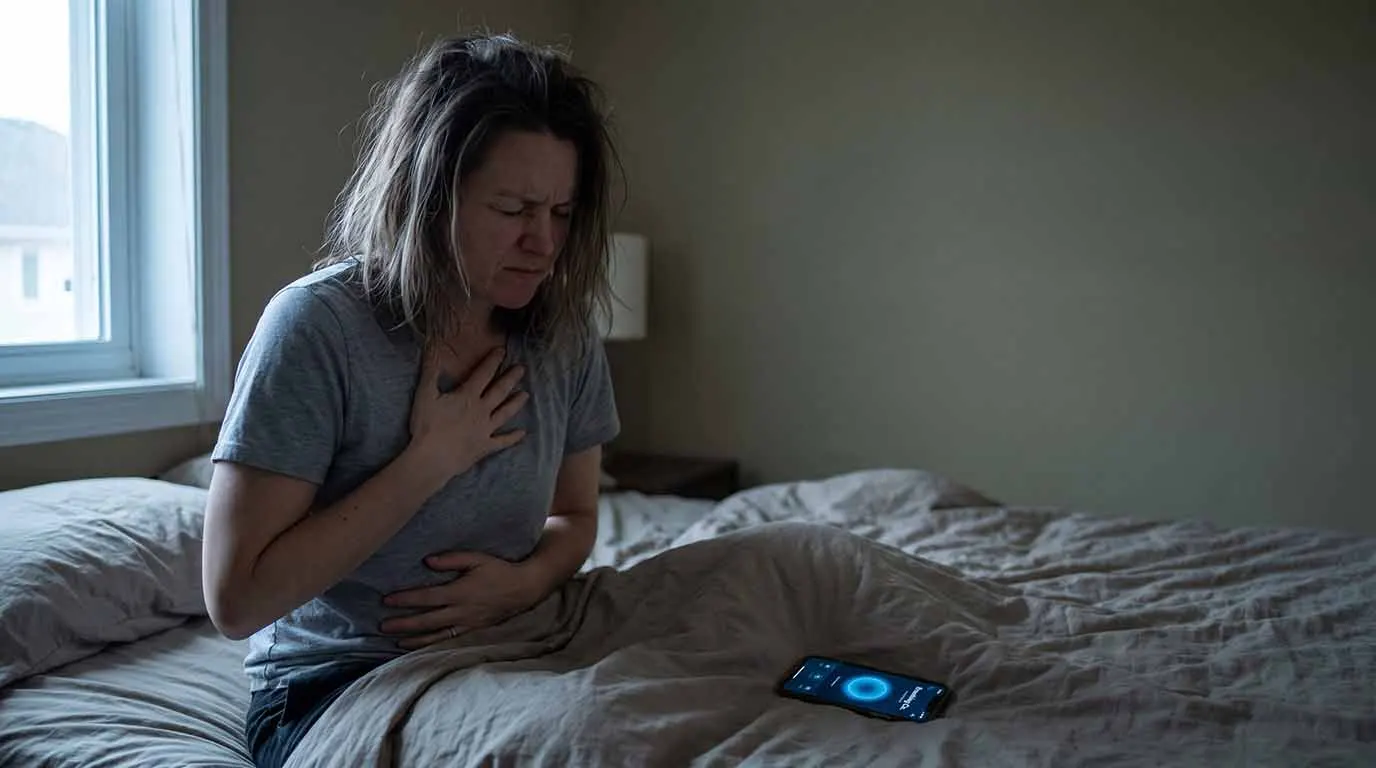
That's why your partner can suddenly feel dizzy, nauseous or out of breath, get heart palpitations or feel like they have to get out of there right now. It feels terrifying and worst of all, it often feels like something is seriously wrong!
"What if it's a heart attack?"
"What if I faint, or lose control?"
So when they tell you they feel terrible, believe them. They're not exaggerating and they're not doing it for attention.
But nothing bad is actually happening. Their alarm system has simply become too sensitive.
And the good news is that it can be retrained. (If you want to know exactly what each sensation is, I explain them in what's actually happening during a panic attack.)
The Kind of Help That Hurts
When someone we love is scared, our instinct is to protect them. To comfort them, to fix it, to make it stop.
That's completely natural, and I want to say this upfront: nothing you've done so far was wrong. You've been doing your best, and that counts.
But some of the most common ways partners try to help can actually keep the anxiety going:
- Always going along as the "safe person". Driving them everywhere, standing next to them in line, never leaving them alone.
- Calming tricks in the moment. "Try to distract yourself." "Calm down." "Don't think about it."
- Helping them escape. Leaving the restaurant early, cutting the trip short, cancelling plans when anxiety shows up.
- Reassuring them over and over. Telling them for the twentieth time that it's not a heart attack and they're going to be fine.
- Taking things off their plate. Doing the groceries for them, making the phone calls, taking over whatever feels scary.
All of this comes from love.
But to your partner's nervous system, it sends a very different message: "This is dangerous. I can't handle it on my own."
And the nervous system responds the way it always does when it senses danger... with more anxiety.
Mirka, our head mentor, knows this better than anyone. When she was agoraphobic, she needed her boyfriend to stand in front of the bathroom door every time she used the toilet, just in case.
It came from a good place, and it made perfect sense at the time. But every time he stood there, her brain learned a little more that she wasn't safe without him.
It works exactly the same with reassurance and with calming tricks. (I wrote more about this in why checking keeps your anxiety going and why breathing exercises can make your anxiety worse.)
How to Support a Partner With Anxiety: Your Role
So instead of being the rescuer, I'm inviting you to play a different role: the steady supporter.
The person who walks beside them, calmly and confidently, while they face the storm and come out stronger for it.
You can't fix their anxiety. Nobody can do that for them. But you can make a huge difference in how they learn to respond to it.
1. Stay calm, even when they're not
You're showing them what safety looks like. When you don't panic when they panic, their nervous system picks up on that.
You're the anchor in the storm. And now that you know what anxiety really is, you also know there's nothing to be afraid of.
2. Don't argue with the fear, and don't feed it either
Validate how they feel, and then gently remind them that it's anxiety. Not a heart attack. Not going crazy. Nothing dangerous.
Once is enough, though. If they ask you the same question for the fifth time, you don't have to answer it a fifth time. You can kindly say: "I think you already know the answer to that one."
3. Support the stretch, don't prevent it
Encourage small steps. Not with pressure or force, but with gentle nudges: "You've got this. Let's stay one more minute. I'm right here."
And slowly step back where you can. Drive behind them instead of driving for them. Wait nearby instead of right next to them. Let them do the groceries while you wait in the car.
4. Celebrate effort, not outcomes
They stayed in the store even though they were scared? Amazing. They let a wave of anxiety come and go without running? Huge win.
Even if they still felt the fear, focus on what they did. That's what recovery is built on.
5. Let them lead
Recovery is personal. You can walk beside them, but you can't drag them through it or carry them.
Some days they'll take a big step, and some days they won't. Both are okay.
What to Say (and Not Say) During a Panic Moment
The goal isn't to make the panic go away as fast as possible. The goal is for your partner to learn that they can let it be there, and that nothing bad happens.
So every time panic shows up, it's actually an opportunity for them to practice.
Things you can say:
- "I'm here. Nothing bad is happening. You're safe."
- "This is your nervous system doing its job. It just hit a false alarm."
- "Let's give it a minute and let the wave pass. You've done this before."
Things to avoid:
- "Are you okay?" That tells them that maybe they're not.
- "Do you want some water? Should we go?" That feeds the urge to escape.
- "Just breathe." They already know how to breathe. What they're learning now is to allow the feelings, without trying to fix them.
Should I talk or stay quiet?
Both can work. It depends on the moment and on what your partner finds helpful. If you talk, keep it short and calm. And if they ask for quiet, respect that. Just being there, calm and steady, is already huge.
What if they ask me to leave with them?
Remind them that it's just nervous energy going through their body, and that it will pass. Suggest staying for a little while and letting the wave come and go together.
But if they really want to leave, that's okay too. Don't make it a big deal, and don't make them feel like they failed. They'll get plenty more chances to practice.
When It Gets Hard (For You Too)
I'm not going to pretend this is easy. Watching someone you love suffer is painful.
And recovery isn't a straight line. There will be good days and hard days. There will be moments where they feel like they're going backwards, where they want to give up, and where the fear screams: "See? It's not working."
Sometimes it even feels worse right after they start doing the work. That's normal, and it's often a good sign. (I explain why in why anxiety gets worse before it gets better.)
That's exactly when your role becomes so powerful.
On one of our group calls, Jo, a participant in week 9 of our program, shared that she'd had a rough week.
Migraines, nausea, mini panic attacks... but she also mentioned that her husband says she's doing very well.
Mirka's answer was spot on:
"I love your husband saying that you are getting better, because usually the people around us notice before we do."
The person with anxiety is still in their head, and they still know exactly how they feel. But their behavior often changes long before their feelings catch up. And you're the one who gets to see that.
So point it out. Remind them how far they've come, especially on the days they can't see it themselves.
And please, take care of yourself too. You don't have to carry this alone, and you don't have to be perfect at it either. Getting it right some of the time is already a lot.
Your Role Isn't to Fix It
If your partner hasn't done so yet, encourage them to get their symptoms checked by a doctor once, just to rule out anything medical.
It gives you both a solid baseline of safety to work from.
Once you know it's anxiety, it's all about learning what anxiety really is and how to respond to it. Over and over, until their nervous system calms down and returns to its normal, relaxed state.
And you can be a big part of that.
You don't need to say the perfect thing or do it all right. Just stay steady. Stay kind. Ask them what they're practicing, and remind them of their strength when they forget.
And above all: believe in their ability to recover, even when they don't.
They'll borrow that belief from you until they can own it themselves.
Your role isn't to fix. It's to understand, to believe and to remind. And to walk beside someone you love as they find their way out.
You've got this. And so do they.
Want something you can keep or print? I put everything from this post, plus answers to the questions partners ask most, in a free guide: The Anxiety Support Guide for Partners.
Thank you for reading.
-Jort
P.S. If your partner wants support with their recovery, they can book a free discovery call with my team, and you're very welcome to join that call too. Everything about the call is explained here.
This article is for education and is based on lived experience. It is not medical advice and does not replace a doctor or therapist. If you have new or changing symptoms, get them checked by a doctor. If you are in crisis, contact your local emergency number.