

In this article
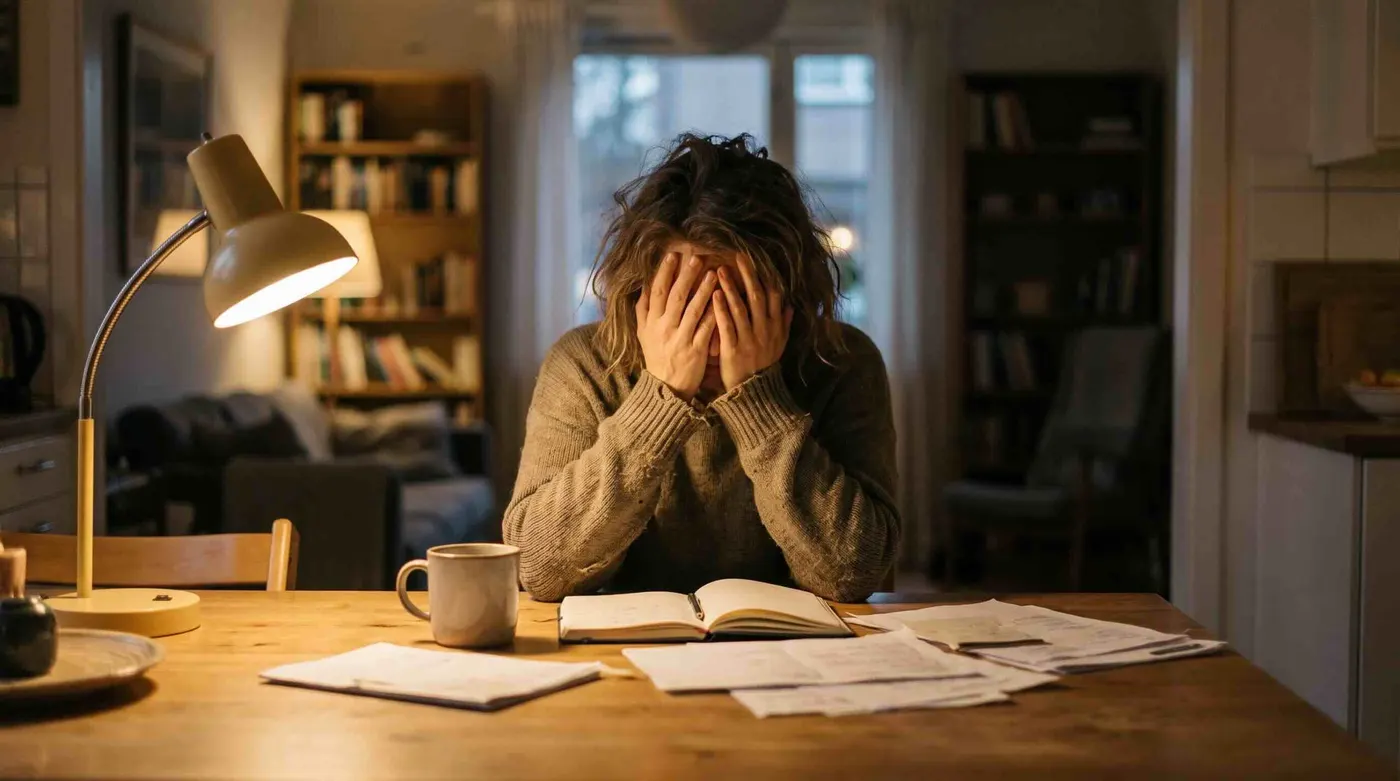
"I feel like I'm just getting worse."
That's what Nancy, one of the participants in our program, told me on our weekly group call yesterday.
She's in week 8, she's been doing the work, allowing anxiety to be - but the dizziness she's been dealing with felt stronger than ever.
"How can this be just anxiety? This just feels worse."
And if you're reading this, I'm guessing you know exactly what she means.
You finally found an approach that makes sense.
You stopped fighting, you started allowing, maybe you're even facing some of the things you used to avoid.
And instead of feeling better... it feels like your anxiety got turned up a notch.
Great!!!
That's one of the most confusing parts of the whole journey, and it's also the moment a lot of people are most tempted to quit.
So if you've been wondering why anxiety gets worse before it gets better, I want to explain what's actually going on.
Because once you understand it, it stops being so scary.
So let's talk a little about that.
What You Were Doing Before Was Holding It Down
Think about everything you used to do to get a grip on your anxiety.
Avoiding the places that triggered it, distracting yourself, breathing exercises, checking, reassurance, keeping yourself busy so you didn't have to feel it.
Some of that actually worked, at least for a little while. You got some relief. And that's exactly why it's so convincing.
But all of those things were a way of holding the anxiety down.
Like pushing a lid on a pot of boiling water. As long as you keep pushing, it feels a bit more under control, even though the pressure underneath keeps building.
So what happens when you stop pushing?
As I told Nancy on that call: the floodgates open.
You stop suppressing it, you stop running from it, and suddenly you feel all of the anxiety that was there all along.
It's not that you have more anxiety. You're just finally feeling what you used to keep away.
And that can feel worse for a while. Of course it does!
You're doing the thing your whole system has been trying to avoid for years.
Your Nervous System Is Protesting
There's another reason it can get louder at first, and it has to do with how your nervous system learns.
For a long time, maybe for years, your nervous system has been taught that the world, some situations or some symptoms are dangerous.
Every time you avoided, checked or fought a sensation, you confirmed that to it: "Yep, this is dangerous, good thing we protected ourselves."
So your nervous system truly believes you're in danger every time.
And its job is to get your attention and keep you safe.
(Which is why you're actually not broken - quite to the contrary!)
Now you suddenly start doing the opposite of what it's been telling you to do.
You don't run, you don't check, you don't call the doctor for the fifth time. And your nervous system goes: "Hey... what the hell are you doing?! Didn't you hear me?!"
So it gets louder. The sensations can feel stronger, the what-if thoughts can come faster, and sometimes it even throws new symptoms or new worries at you that you've never had before.
That isn't a sign that something is wrong with you.
You're temporarily going against the advice your nervous system has been giving you for a very long time, and it takes some time and repetition before it believes you.
You have to behave as if all is well first, before all can be well.
Why Panic Can Come Back
This one surprises a lot of people, so I want to explain it properly.
On her group call this week, Mirka, our head mentor, spoke with Christine, another participant, who suddenly started getting panic attacks at work.
A new symptom, right when she'd been working on her recovery.
Mirka explained something she went through herself.
When you've been stuck in the anxiety cycle for a long time, especially if you're more of the "panicky type", your nervous system can get completely depleted.
It's been running on high alert for so long that it simply doesn't have the energy to keep producing big panic attacks.
So the panic kind of fades, and it can look like things are getting better.
Then you start responding properly. You stop fighting, you stop adding fresh stress on top of everything, and your nervous system finally gets some rest.
It starts getting stronger again... and because it's still sensitized, that new energy can show up as panic again.
That's exactly what happened to Mirka herself!
She went from panic pretty much 24/7, to less and less, to almost none.
And then, a couple of months later, as her nervous system had rested and gotten stronger, it became reactive again and the panic came back for a while.
But this time something was different.
Because she'd been practicing her response, the panic didn't turn into those long, rolling attacks anymore.
It would just peak and burn off, peak and burn off.
Over time it got less and less, until it only showed up in a few specific situations, and eventually it faded completely.
And her advice to Christine was simple: don't try to fix it.
The more you treat it as a problem, the more you tell your brain "Christine needs protection!", and now that the nervous system has its energy back, it has plenty of stress hormones to throw at you.
So you let it come, let it peak, and let it burn off.
The Traps That Make This Phase Last Longer
So the "worse" phase is a normal part of the journey. But there are a few things that can make it last longer than it needs to.
Measuring your progress by how you feel
This is the big one. When you've been anxious for a long time, it's so natural to check in every morning: "How do I feel today? Is it working yet?"
The problem is that how you feel is completely out of your control right now, especially at the start.
The feeling is irrelevant during the journey. It's the result of the one and only thing you can control: your response.
The less you care about how you feel, the quicker it will shift.
You can still feel like crap and be making a lot of progress at the same time. I've seen it over and over again. The feeling comes after the change in behavior, never the other way around.
(I wrote a whole post on why you should stop measuring your recovery by how you feel.)
Getting obsessed with accepting
This is a sneaky one, and I told Nancy about it too.
Before, we may have been obsessed with getting rid of the symptoms and fighting anxiety.
And now... we get obsessed with accepting anxiety!
"Am I doing it right? Am I allowing it enough? Why isn't it working yet?"
That just leads to more frustration, more stress and more anxiety.
You didn't stop fighting, you just started fighting about how well you're not fighting ;)
Using acceptance as a trick
I fell into this one myself. When I started accepting my panic attacks, they would often die down almost immediately, and I thought: "Great, I've finally found something that makes it go away!"
But if you're allowing anxiety only so that it'll leave, you're still resisting.
Just in a nicer outfit. And your nervous system can tell the difference.
Real acceptance means it can stay as long as it wants, however it wants. If you want to go deeper on this, read how to accept anxiety.
Feeling anxious just from reading or watching about anxiety
A lot of people notice their anxiety goes up when they're watching videos or reading articles like this one.
"Even reading about anxiety makes me anxious... so is this making it worse?"
It makes sense when you think about it. What you focus on, you feel.
When you read about racing hearts and dizziness, your brain starts scanning for them.
And if you're reading with the intention of finding the thing that finally makes it go away, you're still in problem-solving mode.
So use this kind of content to understand anxiety, and then go live your life.
Learn what you need, notice if you're going back for more reassurance, and refocus on something else.
You don't need to read every article on the internet to recover. Understanding is the foundation, but the building happens in your behavior.
If you want to learn more about how to measure recovery properly, check out this video that Mirka and I created.

What to Do While It Feels Worse
So what do you actually do when you're in the middle of this phase?
Measure your response, not your symptoms. At the end of the day, ask yourself "How well did I respond?" instead of "How did I feel?".
That's the only scoreboard that matters right now.
Expect to suck at it. Seriously. That's the only expectation I want you to have at the start.
It's a skill, like learning to swim or ride a bike. Kids don't expect to know how something works before they try it, and that's exactly why they learn so fast.
Let your anxiety be your exposure. If your symptoms show up every single day, that's your practice.
You don't have to go looking for scary situations to do the work. Every time anxiety shows up and you respond properly, you're practicing.
Give yourself the compassion you'd give someone else. If a friend in our group told you they were struggling while doing the work, you'd tell them they're doing great and to keep going.
You deserve that same compassion.
Picture the wave. When you feel a wave of anxiety coming, picture it as a wave in the ocean.
The first one might knock you back a little, salt in your nose, and it sucks. But fighting the waves only makes them bigger.
Let them wash over you, get up, and carry on with your day.
Feeling Worse and Getting Better Can Happen at the Same Time
I know this sounds strange, but it's one of the most important things I can tell you: feeling worse and actually getting better can happen at the very same time.
When I first faced my anxiety with the five steps, I was terrified.
It wasn't fun at all.
But even just inviting my anxiety along made me a little more confident that a panic attack was okay to have. Harmless, if not comfortable.
And every time I went through it and saw that nothing happened, I got a bit more powerful.
You get powerful through it, but it has to be through it.
Nancy told me she felt stuck. My answer was: you're not stuck, you're learning.
You're willing to do the work, and you're still struggling with it. Those are two signs that are pretty normal.
The feeling of being stuck doesn't make it the reality.
And if anxiety does come back strongly at some point further down the road, that isn't the end of the world either.
It's often the moment people make the most progress, because they get to prove to themselves they can deal with it. (More on that in why setbacks don't mean you're back to square one.)

So if it feels worse right now, take a breath.
It doesn't mean you're doing it wrong, and it doesn't mean it isn't working. It might just mean the floodgates finally opened.
Keep responding, leave the expectations at the door, and let the feeling catch up with you in its own time.
It will.
Thank you for reading and good luck!
- Jort
This article is for education and is based on lived experience. It is not medical advice and does not replace a doctor or therapist. If you have new or changing symptoms, get them checked by a doctor. If you are in crisis, contact your local emergency number.