

In this article
Maybe you know you’re not supposed to fight it.
Maybe you understand anxiety is just a ‘false alarm’.
Maybe you know it’s just nervous energy. You know the sensations are harmless. You might even know the steps by heart at this point.
You’ve watched the videos, read the posts, maybe explained the whole thing to a friend who was worried about you.
And then anxiety hits in real life, and everything just disappears.
Instead of allowing it, you’re Googling whether this is a heart attack. Instead of responding properly, you’re spiraling about whether you’re about to faint, or lose control, or embarrass yourself in front of everyone.
And by the time the wave passes, you’re sitting there thinking: I knew exactly what I was supposed to do. Why couldn’t I just do it?
I hear this all the time. And I want to explain what’s actually going on, because once you understand it, a lot of the shame around this just falls away.
So let’s talk a little about that today.
Your Brain Is Not Betraying You
Forgetting everything in the moment is not a personal failing. Instead, it’s more like biology.
When the survival brain fires, the rational brain goes offline. Not as a figure of speech. Literally offline.
The survival brain always has the first word, every single time.
Your reasoning brain comes back second, after the initial wave. So in the moment anxiety spikes hardest, you genuinely cannot access what you know, because the part of your brain that holds that knowledge is temporarily not available to you.
It’s the same reason people go completely blank in a job interview even though they’ve prepared for weeks and could answer every question perfectly from their couch.
High-stakes activation just shuts down the retrieval system. The information is there, the access isn’t.
So when anxiety hits hard and your brain immediately goes to “what if this is a heart attack” instead of “this is just nervous energy,” that’s not stupidity, that’s not weakness.
That’s the survival brain doing exactly what it was built to do.
It got there first. It always does.
You didn’t fail. You were human!
Those are different things.
The Only Question That Matters
OK, so, the survival brain has the first word. Fine. You can’t stop that.
But it doesn’t have the last word.
Your reasoning brain comes back online, and when it does, that’s your moment. That’s when the response kicks in. That’s when the skill you’ve been building actually has something to work with.
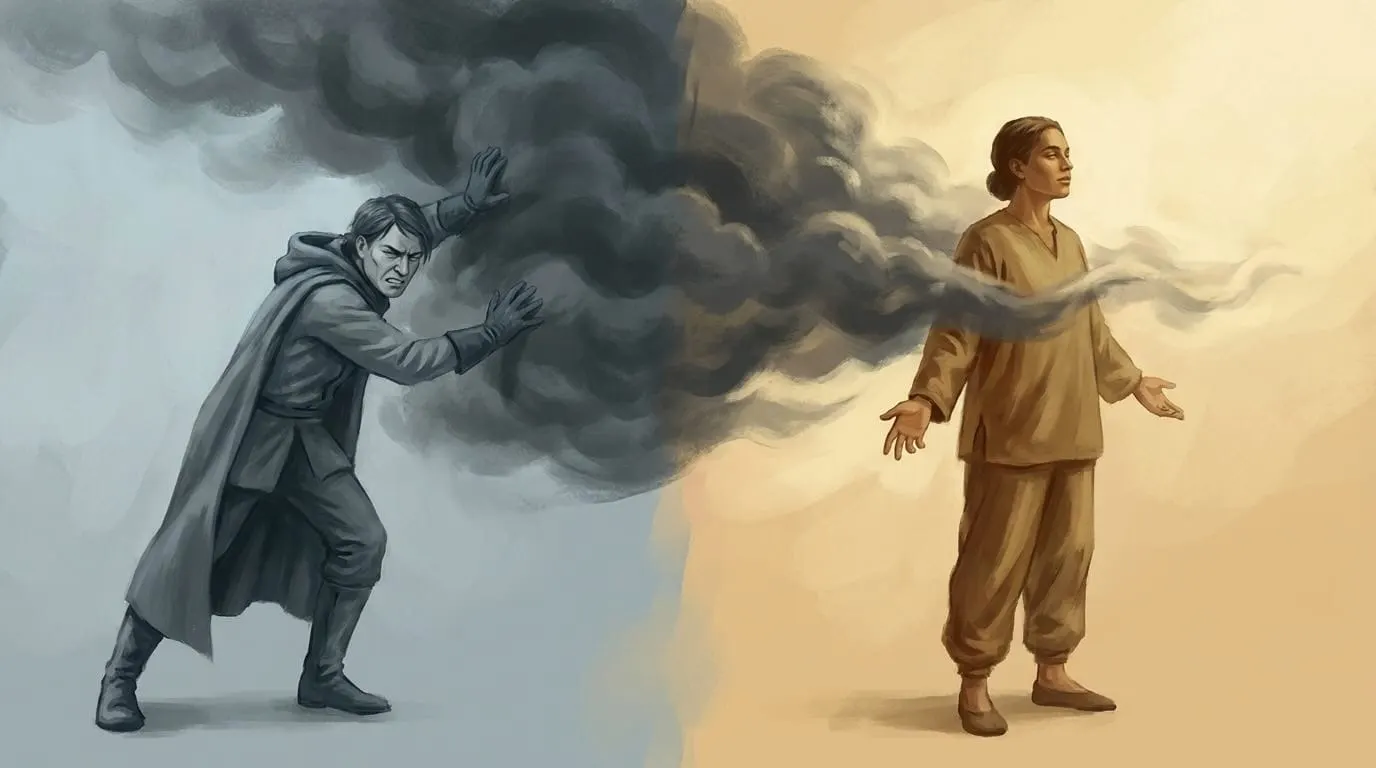
Recovery isn’t about stopping that first automatic reaction. The catastrophic thought, the “what if I’m dying” spiral, the freeze. You’re not going to prevent that. What changes is what happens next.
Do you catch it? Are you aware? Do you correct? Do you remind yourself what this actually is and change your response?
That’s the whole game! And the first reaction being automatic doesn’t mean the second one has to be.
It’s not all “click, run”. We can make a decision every time we become aware, to change our reaction. And the more you do that, the more…
The Gap Gets Shorter Every Time
This is the part I really want you to understand, because I think it’s the most encouraging thing I can tell you.
The more you practice correcting yourself, the faster the correction comes.
And I’m living proof of that, for whatever it’s worth.
I’m not just talking about anxiety by the way, because (most of you will understand this): the more you correct yourself and respond properly, the more anxiety will dissipate. Until you no longer have symptoms!
But no symptoms, like for me, does not mean no unproductive patterns anymore. I still overthink or ruminate at times.
Now when I catch myself overthinking something, I correct and refocus almost immediately.
It’s almost automatic. But that was not always the case. There was a time, not that long ago relatively, where I wouldn’t even notice I’d gone down a rabbit hole until the symptoms were already strong.
And then I’d be fighting the symptoms AND ruminating about the fact that I was in it AGAIN.
Two problems for the price of one. Great deal, highly recommend, zero stars… 😉
The gap between the first reaction and the correction was long. Really long. And then with practice, it got shorter. And shorter. Until it started happening almost without me needing to think about it.
That’s where the skill goes when you keep building it. Not to “anxiety never fires.” To “I catch it and correct so fast it barely registers.”
What Doing It Right Actually Looks Like
I also want to address the bar you’re holding yourself to, because I think it might be set in the wrong place.
A lot of people picture “doing it right” as: anxiety shows up, I immediately remember everything, I apply the response perfectly, it passes calmly, I move on.
That is not what it looks like.
That’s what it might look like eventually, after hundreds of reps, in moderate situations. It is definitely not what it looks like in the beginning, or in intense moments, or when you’re tired, or when it’s a new symptom you haven’t met before.
In a hard moment, doing it right might look like: spiraling for three minutes, catching yourself, correcting, carrying on.
That’s it. That’s a rep. A late rep, a messy rep, but a rep that counts.
Outside the hardest moments, every time you practice the response when anxiety is moderate, you’re building the muscle. So that when things are intense, the habit is closer to the surface and doesn’t need as much active retrieval to find.
You’re building something every time, even when it doesn’t feel clean.
The Shame Makes It Worse
One more thing worth saying, because I see this happen a lot.
Most people add a second layer on top of the forgetting. The self-criticism. “I know better than this. I’ve learned all of this. Why can’t I just do it?”
And that self-criticism is itself resistance. It’s another thought you’re engaging with, another thing you’re fighting, another signal to your nervous system that something has gone very wrong here.
In the moment, you weren’t failing. Your brain was doing what brains do when the alarm fires.
The right response to realizing you forgot is to catch it, correct it, and carry on. Not to add a whole punishment round on top!!
You can ALWAYS still correct yourself, by ending the unproductive patterns around something you wished you had differently in the past. That is out of your control now, but the way you engage with what’s passed isn’t.
As you know now, the survival brain gets there first. That’s going to keep happening. And that’s genuinely okay.
The Gap Just Gets Shorter
That’s really the whole message here.
The survival brain will always kick in first. You will probably always have that initial moment of catastrophizing or freezing or spiraling. And that’s not the problem. The problem was never the first reaction. It’s always been the response that follows.
And every time you catch it, correct it, and carry on, that gap between the alarm and the correction gets a little shorter. A little more automatic. A little less of an emergency.
One rep at a time.
And you see that anxiety symptoms naturally dissipate – and in life, you experience generally way less stress, cause you stop adding to it.
This article is for education and is based on lived experience. It is not medical advice and does not replace a doctor or therapist. If you have new or changing symptoms, get them checked by a doctor. If you are in crisis, contact your local emergency number.