
In this article
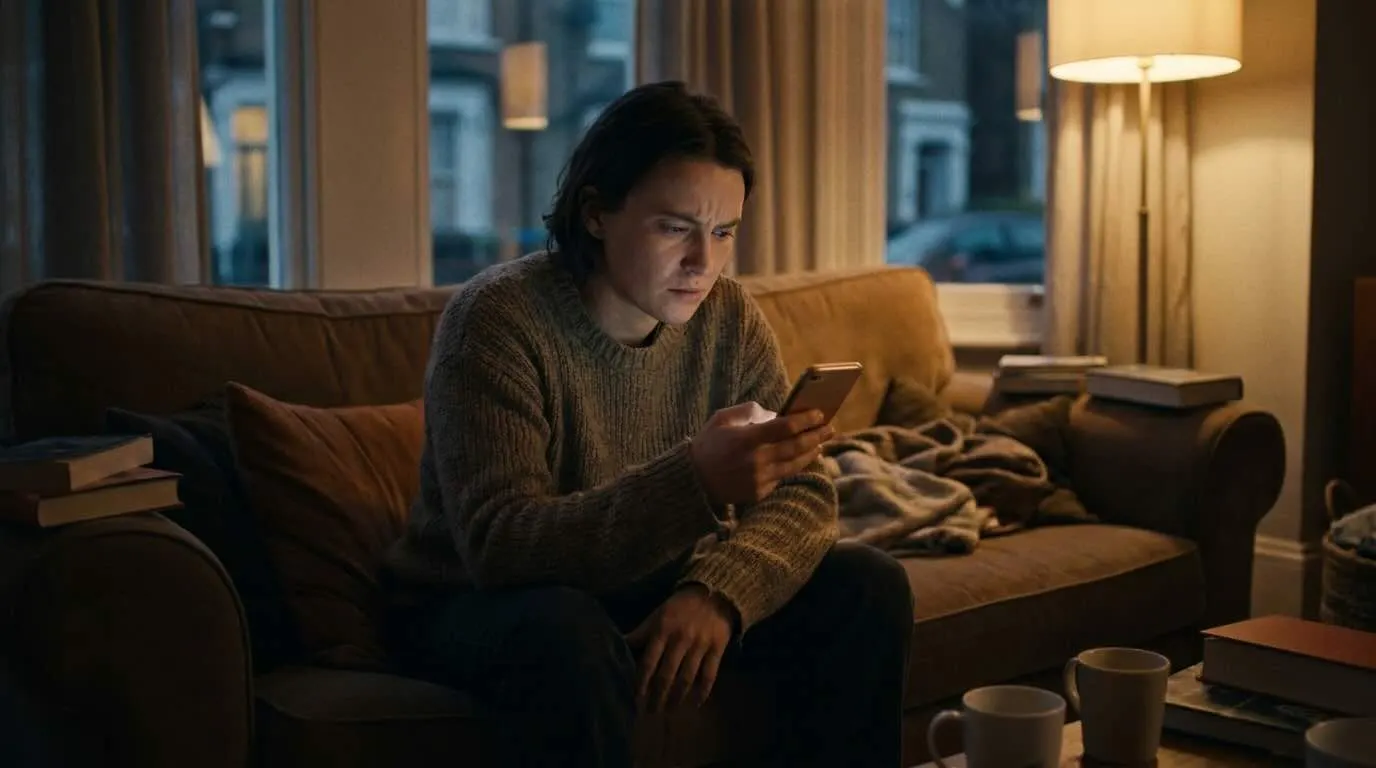
"I'm currently jailed to a 10 mile radius of my home unless I have a 'safe person'."
That's how one person described their life to us.
Someone else told us: "My anxiety has made me feel like a prisoner in my own home."
And another simply said: "I just watched the world go by and watched everyone live the life I wanted."
If you're reading this because you're scared to leave the house, I'm guessing at least one of those hit a little too close.
My own world got smaller too, back when I was still stuck in the anxiety cycle. I didn't go to restaurants and I didn't go out much.
No public transport, no coffee. And when I did force myself to get on a plane for holiday I would always worry and think "What if I get sick and have to throw up... in front of all these people?"
So if you want to know how to overcome agoraphobia, I want to start by explaining what's actually going on. Because once you see how your world got so small, it becomes a lot clearer how to make it big again.
So let's dive in.
What Agoraphobia Actually Is
When most people hear "agoraphobia", they think of a fear of open spaces or crowds.
But for most of the people we speak with, it looks very different. It's the fear of leaving the house altogether.
Your home turns into a kind of bubble. Inside it, you feel more or less okay.
Some people can still move around a small zone outside of it, like their street, their work or a store five minutes away, especially with a "safe person" next to them.
But for a lot of people, though, the bubble is just the house itself. And the moment you go past that invisible line, the alarm goes off.
And the crazy thing is, you're not actually afraid of the supermarket, the highway or the park.
You're afraid of what might happen inside of you when you're there.
A panic attack, or a wave of really high anxiety, far away from the place where you feel safe, with nobody around to help and no quick way to get back.
That's also why agoraphobia so often starts after panic attacks or a period of intense anxiety.
Maybe you had one in a store, on the highway or at a party, and it felt so awful that your brain filed it away as "Being away from home is dangerous."
Why Your World Keeps Getting Smaller
What you feel during that panic or high anxiety is your fight or flight response: adrenaline, a pounding heart, dizziness, maybe even feeling unreal.
(BTW, I explain each of those sensations in what's actually happening during a panic attack.)
It's uncomfortable as hell, but it isn't dangerous.
The problem starts with what we do next. You leave, you go home, and the relief is instant.
Your brain learns: "Pffew... home is safe, out there is dangerous!! Good thing we got back."
So the next time, the alarm goes off a little earlier.
First it's the highway, then the store, then the end of the street.
Every escape and every "I'll just stay in today" makes the bubble a little tighter. And because you're constantly checking whether you're about to feel anxious when you go out, the anxiety often starts before you've even opened the front door.
(That's anticipatory anxiety, and it's a huge part of this.)
Then there are the safety behaviors that slowly sneak in: only going out with your partner or a parent, always knowing where the exits are, sitting near the door, the water bottle, the phone that's always charged, the one route you know by heart.
They feel like protection. But every one of them quietly tells your brain "You can't handle this on your own."
And the cost is real. One of our graduates, Josh, told us he deliberately spent the vacation money, just so his family couldn't ask to go on a trip.
Others told us they missed their kids' games, stopped driving altogether, or haven't been more than twenty minutes from home in years.
If that's you, please know this: you're not weak, and you're not broken.
You've been doing exactly what any human being would do to stay safe. It's just that this strategy is the very thing keeping you stuck.
(Quick side note: if you have new symptoms, or symptoms that feel different from usual, get them checked by a doctor. Once you know it's anxiety, everything below applies.)
The "Safe Zone" Is a Story Your Brain Tells You
This is one of my favorite things to explain, so stay with me.
Imagine you were teleported in your sleep to an exact copy of your house... but in China.
Same couch, same kitchen, same bed. You'd wake up feeling totally fine.
But then the moment you stepped outside and saw where you were... the panic would hit. Right!? Cause you're in freaking China - and not near your house AT. ALL.
Why, though? Because your house isn't what makes you safe. What your brain believes about your house does.
The safe zone is a story, and your brain simply believes what you tell it.
You can see this in people whose agoraphobia got really severe, too.
Some don't even feel safe at home anymore, only in their bed or in one room. That shows it was never about the place. It's about the fear of fear, and that comes with you wherever you go.
One of our mentors put it beautifully: "If I can panic at home, I can panic at the gym. It doesn't really matter, because it's not the place, it's inside of me."
That might sound scary at first, but it's actually the best news there is.
Because if the problem isn't out there, the solution isn't out there either. It's in how you respond. Or as another mentor likes to say:
"You are your own safe person."
How to Overcome Agoraphobia
So what do you actually do? It's not about forcing yourself out the door and white-knuckling it until you collapse.
And it isn't about waiting at home until you feel ready, either, because that day doesn't arrive on its own.
1. Understand what you're dealing with
You can't solve something you don't understand. Once you know that the dizziness, the racing heart and that "I need to get home NOW" feeling are just adrenaline, a false alarm, going outside stops feeling like walking into actual danger. It still feels uncomfortable, but now you know what it is.
2. When anxiety shows up outside, don't run, respond
This is where the real change happens. When panic or high anxiety shows up while you're out, your brain will scream at you to go home.
Instead, try to allow it to be there: "Okay, this is anxiety. It's just adrenaline, and it's allowed to be here."
Let your heart race, let the dizziness be, and keep doing what you were doing, as well as you can.
And watch your words. "I can't leave" is a sentence that isn't actually true in many of these cases.
If the building caught fire, you'd be out in seconds. You can leave, you just often don't want to.
So swap "I have to stay" and "I can't get out" for "I want to stay." Telling yourself you're trapped is exactly what makes your fight or flight go wild.
3. Take small steps, and repeat them
If you're afraid to leave the house, your first goal isn't a holiday abroad. It's the end of the street and back. Then the corner store. Then a little further.
And do them again and again, until they get boring. One member of our program drove to a spot 6 or 7 miles outside his comfort zone, 25 times in three weeks, until it was just... a drive.
Boring is great news, because boring means your brain has stopped seeing it as a threat.
4. Slowly drop the crutches
The safe person, the water bottle, always sitting by the exit.
You don't have to throw them all away on day one. But every time you leave one behind, you prove to yourself that it was you handling the anxiety all along, and not the crutch.
I still remember a moment at IKEA (a perfect place for this, because you can't get out of there quickly ;)).
I'd finished a coffee and wanted a second one, and an old thought popped up: "Better not, you might get a panic attack." I caught it, got the second coffee anyway, and when some panic came up, I let it be there until it passed on its own.
And a free coffee has never tasted this sweet before! ;)
5. Go out to live, not to test yourself
This one matters more than people think. If every trip outside is a test, you're still making anxiety the main thing.
Go out because you want to see a friend, take your kid to the park or grab that coffee, and let anxiety come along if it wants to.
One of our mentors says it like this: "I can feel terrible here, or I can feel terrible somewhere else. And being anxious somewhere else is more fun than being anxious and living the same day over and over again at my house."
They Got Their World Back
I want to tell you about Mirka, our head mentor, who many of you know.
Mirka used to be agoraphobic. She once spent a whole day in the bathtub, waiting for her boyfriend to come home, because she was too afraid to get out.
She couldn't walk past the kitchen in her own house without panicking. And whenever she used the toilet, she needed her boyfriend to stand in front of the door, just in case.
Mirka fully recovered seven years ago.
Since then she's been flying everywhere, and recently she was in Egypt, riding a horse along the beach. No symptoms, no crutches, nothing!!!
Pretty cool, huh?
Then there's Josh, the graduate who secretly spent the vacation money and avoided arenas for years. Not that long after, he was taking road trips up a mountain. You can watch his journey - in just 6 minutes - here:

And Michael, another graduate, went from nearly housebound with daily panic attacks to being panic-free and living what he calls a full, expanding life.
As for me, a while ago I took a ferry that always used to trigger me, because being stuck out on the water felt like a trap.
This time, looking out across the sea towards the island, I didn't feel trapped at all. I just felt proud, of my own journey and of everyone who's still on theirs right now.
There is definitely life after anxiety.
"But I Can't Even Get Out the Door Right Now"
I get it, and that's okay.
You don't have to start with the supermarket.
You can start with the front porch, the backyard, or opening the door and standing there for a minute while you let the anxiety do its thing.
You won't feel ready, and you don't need to.
Confidence doesn't come first and action second. It's the other way around: you take the step while you're scared, and the confidence comes afterwards as the reward.
And remember that responding properly looks different per day.
Some days you'll make it around the block, some days you won't get past the door, and that's fine. A hard day doesn't erase your progress. You're building a skill, not passing a test.
Your world got smaller one avoided step at a time. And it gets bigger again the same way, one step at a time, with anxiety allowed to come along for the ride.
Thank you for reading.
-Jort
P.S. If you'd like our support through your recovery from agoraphobia, book a free discovery call with a member of my team to discuss if our Mentorship Program would be a fit for you here.
This article is for education and is based on lived experience. It is not medical advice and does not replace a doctor or therapist. If you have new or changing symptoms, get them checked by a doctor. If you are in crisis, contact your local emergency number.