
In this article
A flutter in your chest. A headache that feels different from the last one. A tingle in your left arm.
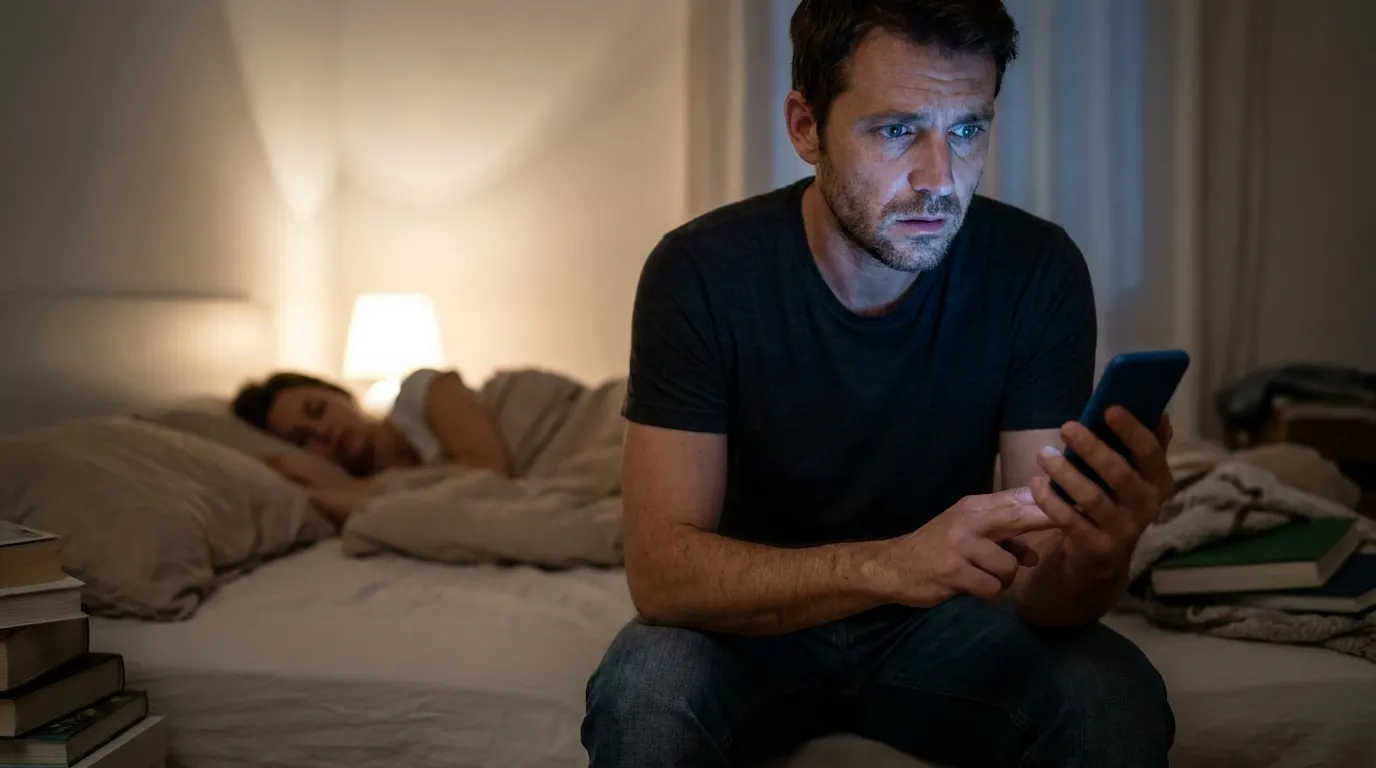
Within seconds, you're checking your pulse. Then you're on Google. Then you're reading about something you can't stop thinking about for the rest of the day.
Maybe you got checked last week. Maybe the doctor said everything looks fine. That helped, for a day or two. And then a new symptom showed up, and with it the same question:
"What if this time it's real?"
That's health anxiety. And I know it well.
During my years with anxiety, I had these sharp stings in my chest. I went to the doctor, and I was told it was a result of hyperventilation.
Basically; too much oxygen in my chest, which could cause these random (harmless) stings.
I didn't like that answer at all. I wanted certainty.
In this post, I'll explain why health anxiety feels so convincing, why reassurance never seems to last, and what you can start doing about it today.
Because health anxiety can be overcome, just like every other form of anxiety.
What Is Health Anxiety?
Health anxiety is the ongoing fear that something is seriously wrong with your body, even after doctors have found nothing.
What keeps you stuck usually isn't the fear of being sick.
It's the fear of not knowing whether you're sick. A small sensation opens a question, and your mind can't leave that question open.
And the symptoms are real. When your nervous system is on high alert, adrenaline and cortisol do exactly what they're designed to do.
Common health anxiety symptoms include:
- A racing or pounding heart
- A tight or stinging chest
- Nausea or an upset stomach
- Dizziness or feeling lightheaded
- Tingling or numbness in your hands, arms or face
- Headaches, muscle aches or twitches
None of that is in your head. You really feel it. It just doesn't have to mean you're in danger.
Why Your Brain Always Expects the Worst
Your brain is wired for survival.
Because of that, it gives more weight to negative information than to positive information, and it predicts bad outcomes based on it. This is called the negativity bias.
For our ancestors, that made perfect sense. If the tribe found a bush full of berries and one of them made someone very sick, which berry do you think they remembered?
Not the hundred good ones. And if a tiger jumped out of the bushes, they'd be extra careful the next time they walked past thick bushes.
Remembering danger kept them alive.
Your brain still works that way. And it hates uncertainty. What's known and predictable feels safe, even when it isn't ideal.
What's unknown could be dangerous.
So when your body does something your brain can't explain, like a strange sensation in your chest, it tries to map it out.
It does that by looking for threats. It pulls up every scary story it can find: the relative who got sick, the article you read at 2AM, the post someone shared online. And it applies all of it to you.
To your brain, uncertainty equals potential danger.
That's why "it's probably nothing" never seems to win against "but what if it's something?"
Expecting the worst feels protective. Expecting that you're fine feels like letting your guard down.
But when you don't have enough information, "this is serious" is not any more true than "this is nothing."
Your brain is just biased toward the negative.
Why "This Time" Always Feels Different
You probably already know you have anxiety. You may have read a dozen posts like this one. And still, every new symptom feels like the exception.
People tell us things like:
"I know something else is wrong. I know what anxiety is."
"I started from brain tumors, spinal cord tumors and now I'm convinced I have lymphoma."
Last month it was your heart. This month it's your head. Next month it might be a lump, your stomach or your eyes.
Because the symptom keeps changing, it keeps feeling new. And to your brain, new means potentially dangerous.
But the cause behind it never changed. I wrote more about that in Why Anxiety Keeps Changing.
The Health Anxiety Loop
It usually goes like this:
- You notice a sensation.
- A what-if shows up.
- You scan your body, check, google, or ask someone if they think you're OK.
- You feel relief, for a few minutes or a few days.
- A new sensation shows up, and it starts all over again.
That relief is what keeps the loop going.
Every time you check, you tell your brain: this was worth checking.
So your brain gets better and better at finding the next thing to check.
I go deeper into this in You're Not Getting Better Because You Keep Checking.
Get Checked, Then Put It Under The ☔️
Let me be clear: if you have a new symptom, or a symptom that changes, see your doctor. That's always the right thing to do.
But once you've been checked and you've been told you're fine, that question has been answered.
From that point on, more checking won't make you any healthier. It only gives your anxiety more attention.
Our mentor Mirka has a great analogy for this:
Picture a house with a few holes in the roof. Every time it rains, water comes in. The carpet gets wet and moldy. The TV stops working. Round stains show up on the ceiling.
You could buy a new carpet, a new TV and repaint the ceiling. But with a leaky roof, you'll be doing it all again after the next storm.
Health anxiety works the same way.
The racing heart, the headaches, the tingling, the stomach, the what-if thoughts.
They feel like separate problems, each one asking for its own answer. But they all come from the same leak: a nervous system that has been on high alert for too long.
So once you've been checked, put every symptom under one umbrella.
"What's wrong with my heart?" becomes "This is anxiety. One cause, not ten different problems."
Think about having the flu. You don't google every symptom. You don't wonder why your nose is stuffy, why you're so tired, and what it all means.
You know it's the flu, and you know the symptoms will pass when the flu does.
How to Stop Health Anxiety From Running Your Day
You can't think your way to 100% certainty. Nobody can. So instead of chasing it, start changing how you respond when the what-if shows up. Three things you can practice:
1. Delay the check. When you feel the urge to check your pulse, google a symptom or ask for reassurance, wait 15 minutes first. You're not banning it. You're just not doing it right now.
Often, by the time the 15 minutes are up, the urge has faded on its own. And that teaches your brain something reassurance never can: you can feel uncertain, and you're still OK.
2. Schedule your checking. Pick one moment a day for it, for example 6 p.m. Not before, not after. When a worry shows up at 10 a.m., you tell it: "Not now. You'll get your turn tonight."
You'll probably notice that by 6 p.m., most of it doesn't feel that important anymore.
3. Let the thought be there, and redirect. The what-if will come back. That's fine. You don't have to argue with it, analyze it or prove it wrong. Let it be there, and bring your attention back to what you were doing: the conversation, the dishes, the drive, the show you're watching.
When it pulls you back again, redirect again. And again.
The goal isn't to make the thought disappear fast. The goal is to practice a different response, over and over.
I explain this in more detail in this video:

The Shift That Actually Heals Health Anxiety
The symptoms were never the real problem. The way you respond to them is what keeps the loop alive.
"Anxiety heals when you stop focusing on the symptoms and start focusing on your response to the symptoms."
And your nervous system wants to settle down again. It's designed to find its balance.
What gets in the way is everything we do to fight, fix and figure out the symptoms, because to your brain, a problem you keep trying to solve is a threat.
The three tools above are a good start. But changing your response for good, so the loop stops and your nervous system can calm down, takes more than a few tips. That's what we work on step by step in our program, together with our mentors.
What Recovery From Health Anxiety Looks Like
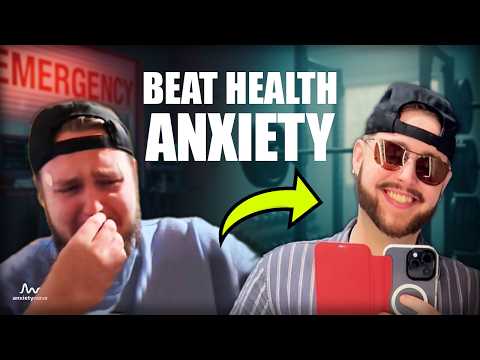
Brandon once drove himself to the fire station, convinced he was having a heart attack. It happened again and again. Cardiologists, scans, more tests.
"I got to a point where I wanted them to find something... I wanted an answer, because if we know the answer, you can fix it."
The answer was always the same: anxiety.
He hasn't had a panic attack since week three of our program, and today he's one of our mentors, without any health anxiety!

Looking back, this is what made the difference:
"Finding peace with uncertainty was freedom to me."
You can read his full story here: Brandon's Story.
Health anxiety isn't a special case that can't be helped.
It's the same loop as every other form of anxiety, with the same way out.
This article is for education and is based on lived experience. It is not medical advice and does not replace a doctor or therapist. If you have new or changing symptoms, get them checked by a doctor. If you are in crisis, contact your local emergency number.