

In this article
I’ve always been afraid of dying. And if it’s my time, I’ll probably go out screaming and shouting.
So I’m not going to tell you that you need to make peace with mortality, or get to some zen place where the idea of death doesn’t bother you.
That’s not what this is about.
But I do want to talk about what happens when that very natural, very human fear of dying gets latched onto by an anxious brain. Because that’s a completely different thing. And if you’re reading this, there’s a good chance you know exactly what I mean.
So let’s talk a little about that today.
Why This One Feels Different
Here’s what makes fear of dying so hard to shake.
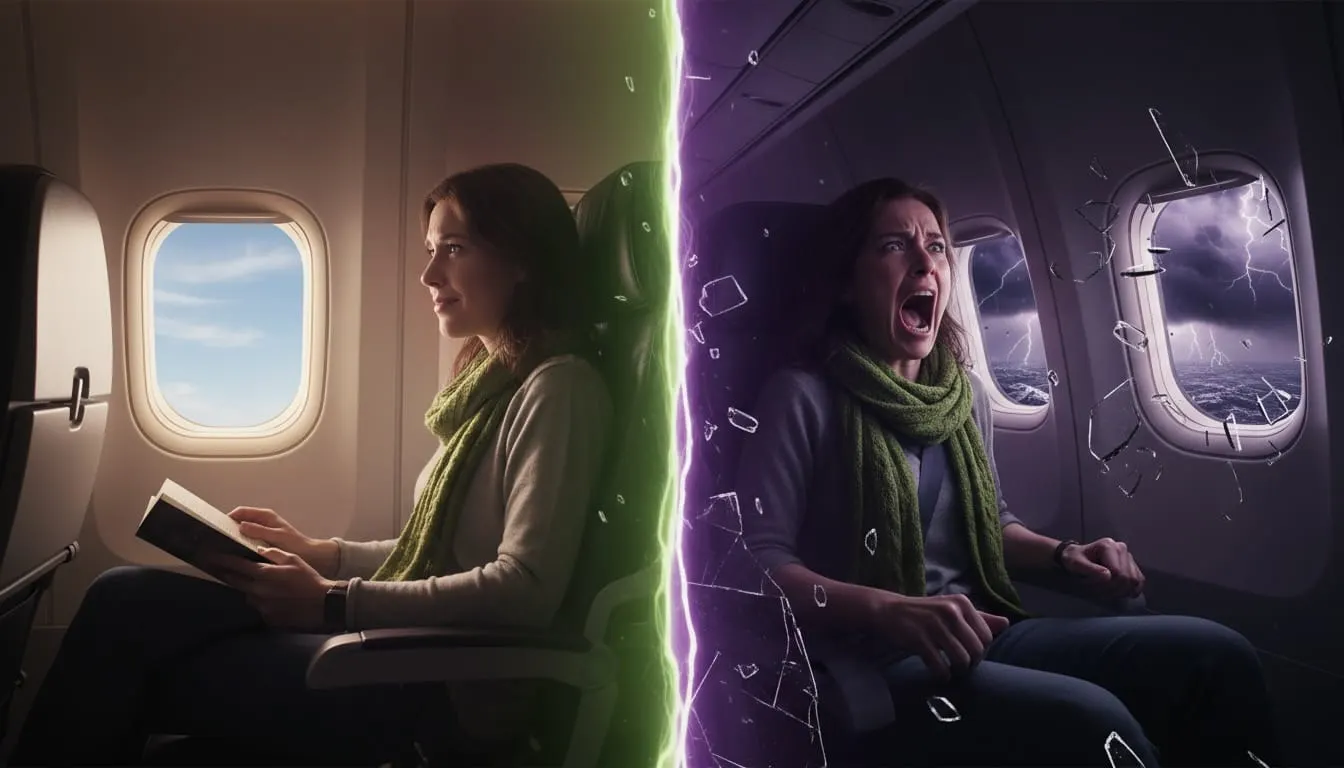
With most anxiety, there’s at least a part of you that knows the catastrophe is unlikely. You know the plane probably won’t crash. You know the chest tightness is probably not a heart attack. You know you’re probably not going crazy.
But death? Death is real. It happens to everyone. You can’t rationally argue your way out of that truth. It is going to happen – and we don’t know when… yikes.
And this is exactly why so many people with this fear feel completely stuck. Most anxiety recovery advice tells you to challenge the thought, to ask yourself “is this really likely?”. But when the thought is “I’m going to die someday”, well, yeah. That’s not a cognitive distortion. That’s just true.
So you feel like you’re the one person the method can’t work for. Like everyone else has an irrational fear that can be talked down, and yours is the one fear that’s actually justified.
I hear this a lot. And I want to explain why that thinking, as logical as it feels, is keeping you stuck.
How Our Brain Works
After my mom and stepdad died in a car accident in 2015, something shifted in my brain that I didn’t understand at the time.
I started over-calculating the probability of dying young. Constantly.
I kept thinking about it, and then I kept thinking about the people around me dying too, and I was fighting and engaging with those thoughts basically 24 hours a day. Increasing my anxiety until it reached a pressure boiling level.
What I didn’t understand back then is how the brain actually works.
Our brain works with possibility, not probability.
When I saw someone so close to me die, my brain started to project that onto everyone around me and onto myself. It made complete sense, really.
It had just experienced death up close. Of course it started flagging it as a real possibility. And I kept fighting that, kept engaging with it, kept arguing with it… which only made things worse.
That’s just a brain doing exactly what a brain does after experiencing something that close and that shocking. It goes into overdrive trying to protect you from ever going through that again.
As if the thought is going to help you to NOT die…
The problem is that you can’t protect yourself from dying by thinking about it more. And fighting the thought doesn’t make it go away.
It’s not like thinking about death 24/7 makes you immortal.
It just signals to your nervous system: this is important, send me more of this.
The Loop You’re Probably In
Here’s what most people with this fear do, and I get it because I did it too.
They engage with the thought every time it shows up. They argue with it, analyze it, Google symptoms related to it, seek reassurance from doctors or partners, and try to think their way to some feeling of certainty that they’re safe.
And every time they do that, they pour fuel on the fire.
Your nervous system isn’t watching your thoughts. It’s watching your behavior.
And when you treat the thought “I might die” as something that needs to be urgently resolved or fought, your nervous system gets the message: this is a genuine threat that needs my full attention.
So it sends the thought more often. It makes it louder. It makes the physical sensations around it more intense.
And now you’re in the loop. The thought shows up, it triggers a physical fear response, the physical response confirms the thought feels dangerous, which makes you engage with it more, which makes the nervous system send more of it.
Round and round.
The Question That Changes Things
So here’s what I want you to ask yourself next time the thought shows up.
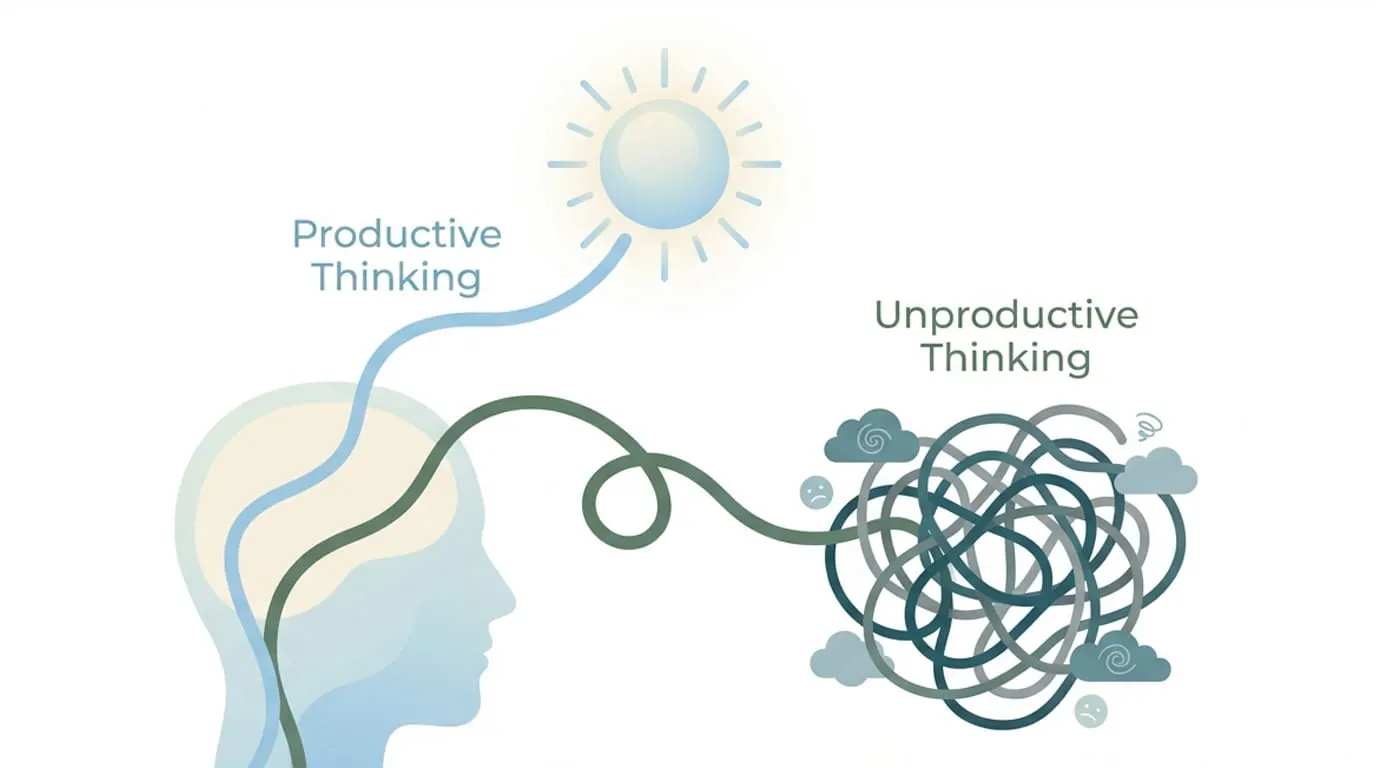
Is this productive? Does me worrying about dying make me immortal?
No. It doesn’t. Not even a little bit.
So what is it actually doing? It’s keeping your nervous system on high alert, producing more anxiety symptoms, making you feel more afraid, and costing you the very life you’re so scared of losing. While adding zero days to your lifespan.
That’s the honest truth of it.
You don’t need to be okay with the idea of dying. Genuinely, you don’t. That’s not the goal here.
But you do need to understand that your brain has latched onto that fear and it will remind you of it all the time. You need to understand how the brain works, so you can deal with it better.
And you fighting it, arguing with it, or trying to make it go away isn’t going to make it stop.
It’s only going to make it louder.
What Responding Properly Looks Like
The shift isn’t about convincing yourself death isn’t real. It’s about catching yourself engaging with the thought and choosing to disengage.
Not because the thought is wrong. Because engaging with it isn’t helping you.
You catch it. You notice it’s there. You ask: is this productive right now?
And then you allow it to be there, without fighting it, without arguing with it, without seeking reassurance, and you refocus on whatever you were doing or on something else.
That’s it. That’s the whole move.
I know it sounds simple and I know it doesn’t feel simple in the moment. Because the thought feels urgent. It feels like if you don’t address it something terrible will happen. But that urgency is the anxiety talking, not reality.
The thought can float around in the background while you make your coffee and get on with your day. You don’t have to resolve it before you’re allowed to live.
And the more you practice disengaging from it, not suppressing it, not fighting it, just not feeding it, the less frequently your nervous system sends it.
Because it’s no longer getting the reaction it’s looking for. It’s no longer being treated as an emergency.
Your brain learns that you thinking about death does NOT equal you dying. So there’s no need for the survival response to kick in.
Fear vs. The Loop
I want to be clear about something because I think it matters a lot.
Having a fear of dying is completely normal. It’s human. Especially after a loss, especially after a health scare, especially when mortality is suddenly more visible in your life.
What’s not inevitable is the loop. The constant engagement with the thoughts and feelings and fighting that. That part is the sensitized nervous system doing what sensitized nervous systems do, and that part responds to exactly the same approach as every other anxiety loop.
The fear of dying is not the problem. The relationship you have with the thought is what’s keeping it alive.
And that’s actually good news. Because you can’t stop being human. But you can absolutely change how you respond when your brain throws this thought at you.
You catch it. You ask if it’s productive. You disengage. You allow it to be there without feeding it. And you refocus on your life, the one you actually have right now, that’s happening while you’re busy worrying about losing it.
That’s where the shift begins.
And that’s the journey, my dear friends.
Hope this has been helpful!
This article is for education and is based on lived experience. It is not medical advice and does not replace a doctor or therapist. If you have new or changing symptoms, get them checked by a doctor. If you are in crisis, contact your local emergency number.